Health & Fitness
How SlimAI Turned a Meal Photo Into a Food Log and Reached 10K+ Installs
Techparser built SlimAI, an AI calorie tracker that logs meals from a photo. Live since October 2025 with 10K+ installs and a 4.6-star Google Play rating.
- Client
- SlimAI
- Industry
- Health & Fitness
- Timeline
- Live since October 2025
- Team
- 1 lead mobile engineer
Results
- 10K+
- Installs on Google Play as of September 2026
- 4.6★
- Google Play rating, published by TECHPARSER, LLC
- 7
- Languages shipped, including Arabic with right-to-left layout
The problem
Calorie tracking works when people do it, and most people stop within days because logging is tedious. Searching a database, weighing portions and typing every ingredient turns a two-minute meal into a five-minute chore. SlimAI wanted logging to take seconds: point the camera at a plate, or say what was eaten, and get calories, macros and ingredients back without filling in a form. The app also had to ship in several languages from the start, including Arabic with right-to-left layout, because the audience was never going to be English-only.
The second problem was economic. Every photo scan and every voice entry calls a paid model, so an app with a generous free tier can lose money on its most active users. SlimAI needed to give new users enough free scans to see the value, while making heavy use lead to a subscription rather than a larger API bill. That pricing logic had to survive reinstalls and stay consistent across the App Store, Google Play and the app's own database, because four systems that disagree about who has paid produce a paywall nobody trusts.
What Techparser built
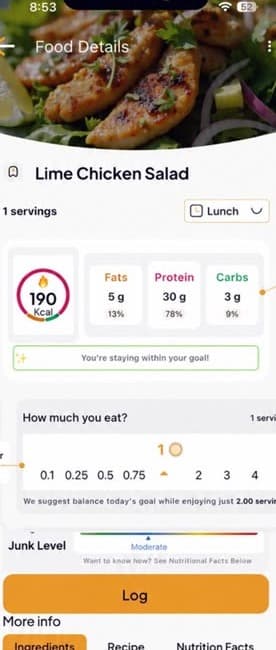
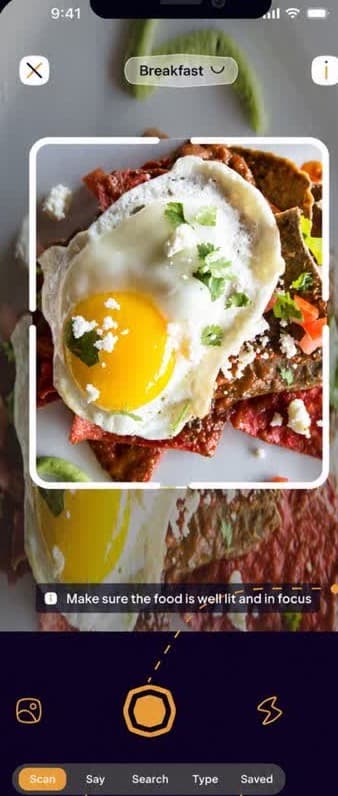
- Photo logging: the user photographs a meal and the app returns the dish name, serving size, calories, macros and ingredients, with every value editable before saving. Breakfast and snack scans go to Gemini; lunch and dinner can be routed between OpenAI and Gemini using a ratio set in remote config.
- Voice and typed logging: an eight-second voice recording is transcribed and matched against the food database, and a typed sentence is checked to be food before the search runs.
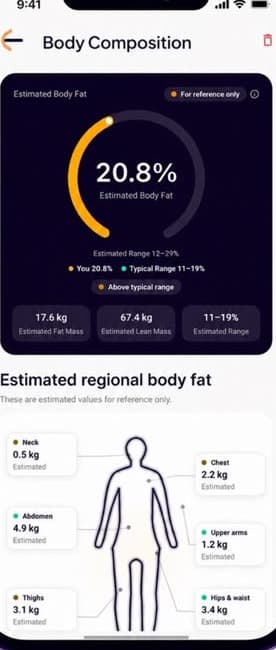
- A guided two-photo body scan that uses ML Kit pose detection and selfie segmentation to check framing, lighting and posture live on the camera feed, followed by a Gemini analysis that estimates body fat overall and across six regions, with history and side-by-side comparison.
- A diet-plan tab built on a curated food database filtered by the user's cuisine and per-meal calorie budget, with no model call at runtime.
- Exercise and step tracking through Health Connect and HealthKit, water and fasting timers, and weight, calorie and macro charts.
- Native home-screen widgets on iOS (WidgetKit) and Android showing daily rings, macros, water and coach lines.
- Monthly and yearly subscriptions through RevenueCat with a three-day trial on the yearly plan, plus a daily credit allowance for free users that is spent on scans and voice entries.
- Seven languages: English, French, German, Italian, Spanish, Dutch and Arabic, with RTL layout, driven from a spreadsheet-based translation pipeline.
Decisions that mattered
Trust through editing
A vision model will misread some meals, and a health app cannot afford to look confidently wrong. Every scan result lands on a food details screen where the user can change the serving, swap ingredients and correct macros before anything is saved. A miss costs two taps instead of the user's trust. The scan itself returns one of three typed outcomes, success, not food, or model exhausted, so the app shows a specific dialog rather than a generic error, and it retries with backoff only when the provider reports a rate limit.
AI cost tied to revenue
Photo and voice logging are the expensive features, so free users draw on a credit balance that is configured in Firestore and topped up once per day when the app opens. The balance lives in the user's cloud record rather than on the phone, so reinstalling does not reset it. Subscription state is reconciled across RevenueCat, Firestore and the store receipt on every launch, with explicit rules for stale documents, lost receipts and admin overrides, because the systems can disagree and the paywall must not.
Frequent releases without risking live users
The app ships as separate staging and production flavors with their own Firebase configuration, so a build can be tested end to end against staging data before it reaches anyone. Firestore schema changes are additive only, with tolerant parsers, because old app versions stay in the field for months. Fastlane targets push builds to TestFlight and Firebase App Distribution, which keeps the release cycle short enough to react to store reviews and to iterate on paywall copy and onboarding.
Outcome
SlimAI has been live on the App Store and Google Play since October 2025. As of September 2026 the Google Play listing, published by TECHPARSER, LLC, shows 10K+ installs and a 4.6-star rating, and the app is on version 1.3.17.
Recent releases tightened how free credits are counted, added promo-code redemption on both stores, and improved the typed and voice logging flows. The seven-locale translation pipeline and the staging flavor are the two pieces that make frequent releases practical for a small team.
Questions about this project
- How long did it take to build SlimAI?
- SlimAI reached the App Store and Google Play in October 2025 and has shipped continuously since; as of September 2026 the app is on version 1.3.17. Techparser treats it as a live product rather than a one-off project, with a staging flavor for testing and Fastlane pipelines for TestFlight and Firebase App Distribution so fixes and features go out regularly.
- What technology stack does SlimAI use?
- The app is built in Flutter, with Firebase for auth, Firestore, storage, messaging, Crashlytics and analytics. Food recognition uses Gemini through firebase_ai and OpenAI models, the body scan uses ML Kit pose detection and selfie segmentation on device, and subscriptions run through RevenueCat. Push notifications go through OneSignal and Firebase Cloud Messaging.
- Can Techparser build an AI nutrition or health app like SlimAI for us?
- Yes. Techparser built SlimAI end to end: architecture, AI features, subscriptions, localisation and store releases. The same team can scope a similar product, from a focused MVP that proves photo logging to a full app with subscriptions and native widgets. Start by booking a call and describing what your users need to log and how you plan to charge for it.