BUILD AN AI PRODUCT, NOT AN AI DEMO
AI MVP Development With Evaluation Built In From Day One
Techparser builds AI MVPs for founders and product teams who need to prove an AI idea works on real data. Every build ships with an evaluation set, cost controls, and fallback behaviour — the parts that decide whether an AI demo survives contact with real users.
WHY MOST AI MVPS STALL AFTER THE DEMO
The demo works. Then real users arrive.
AI prototypes are easy to build and hard to trust. The gap is almost always the same four things: nobody measured output quality, costs were never modelled at real volume, there was no behaviour defined for when the model is wrong, and the whole thing was welded to one vendor. Techparser handles all four as part of the build.
An AI MVP built this way gives you:
A measured quality baseline, so "is it good enough?" has an answer
Cost per request modelled before you scale traffic
Defined fallback behaviour when the model is uncertain or wrong
A model-agnostic layer so you can switch providers without a rewrite
HOW WE BUILD AN AI MVP
Evaluation first, then build, then scale
Most AI MVPs reach production in 8 to 12 weeks depending on data readiness.




Week 1 — Data & Evaluation Set
We assemble a representative question and answer set from your real data. This becomes the yardstick every later decision is measured against, and it is the step most AI projects skip.

Weeks 2–4 — Approach & Baseline
Model selection, retrieval and prompt design, and a measured baseline score. If the approach cannot clear your quality bar, you find out here rather than after launch.

Weeks 5–10 — Build & Harden
Full product build around the AI layer: interface, accounts, guardrails, fallback behaviour, cost controls, and observability on model usage.
Launch & Monitor
Production deployment with quality and cost dashboards, so degradation in model behaviour is visible before customers report it.
OUR SUCCESS STORIES
Success Stories That Prove Our Expertise
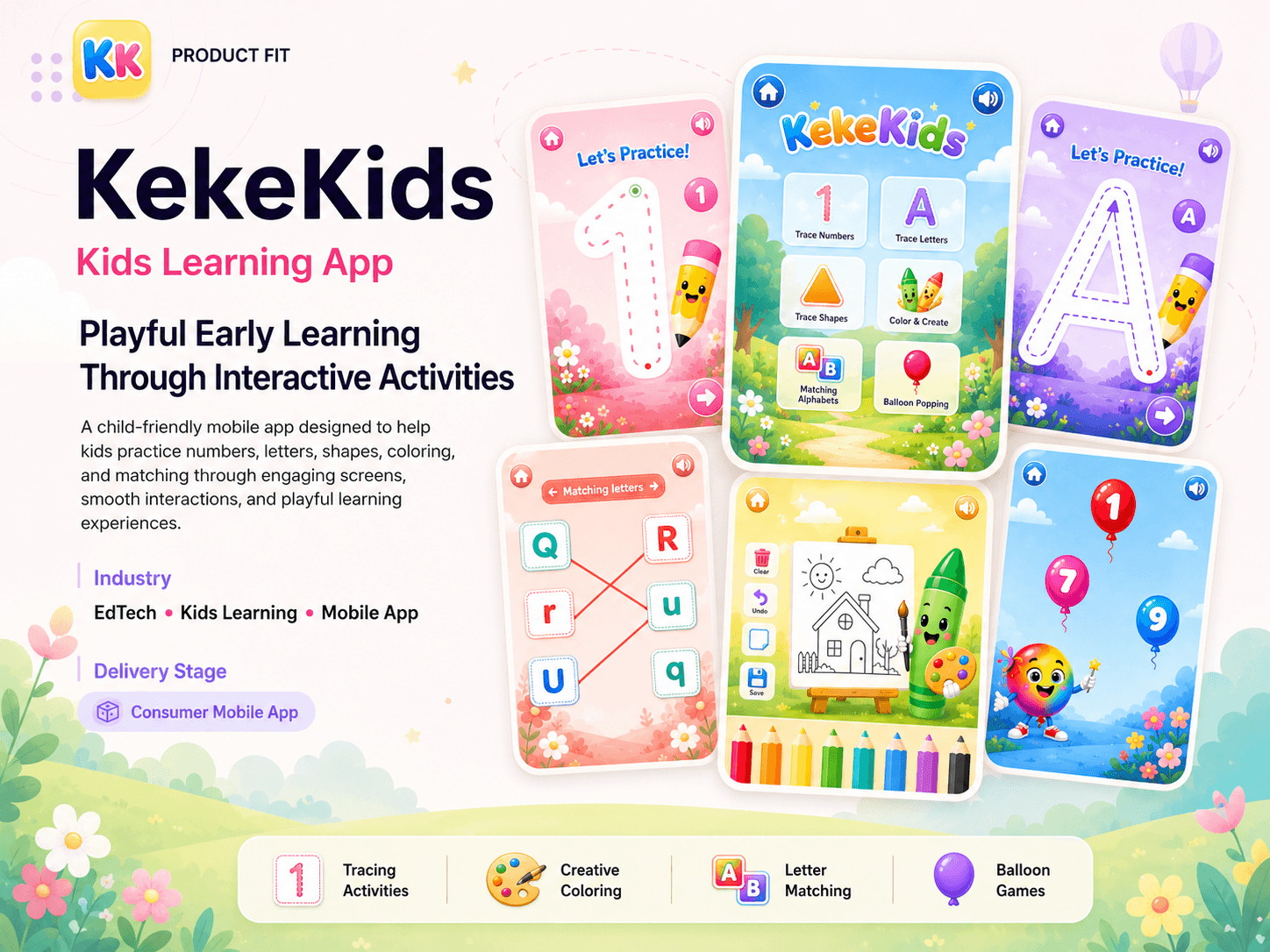
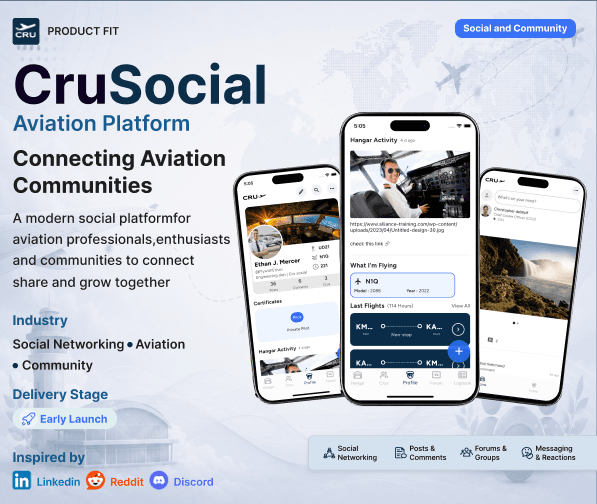
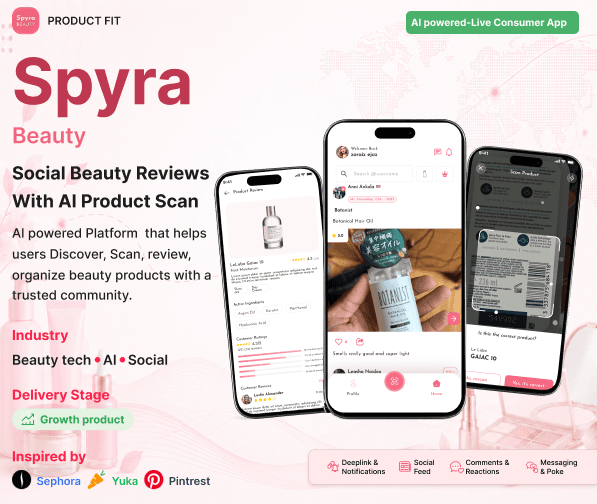
Techparser has helped build and support digital products across AI, SaaS, healthcare, mobile apps, e-commerce, beauty, wellness, real estate, automation, dashboards, and business platforms. Our work combines software engineering, product design, cloud architecture, AI integration, and growth execution to help businesses launch, modernize, and scale.
AI MVP Development: Insights & Answers
An AI MVP is the smallest deployed version of an AI-powered product that real users can use on real data. Unlike a demo, it includes measured output quality against an evaluation set, defined behaviour when the model is wrong, cost controls at expected volume, and monitoring. Those four things decide whether the product survives production, so they are in scope from the first release.
A normal MVP is deterministic; an AI MVP is not. Given the same input, a language model can produce different outputs, so the MVP needs an evaluation set to measure quality, guardrails and fallbacks for wrong answers, and cost modelling because inference cost scales with usage. Skipping that layer is the main reason AI pilots never reach production.
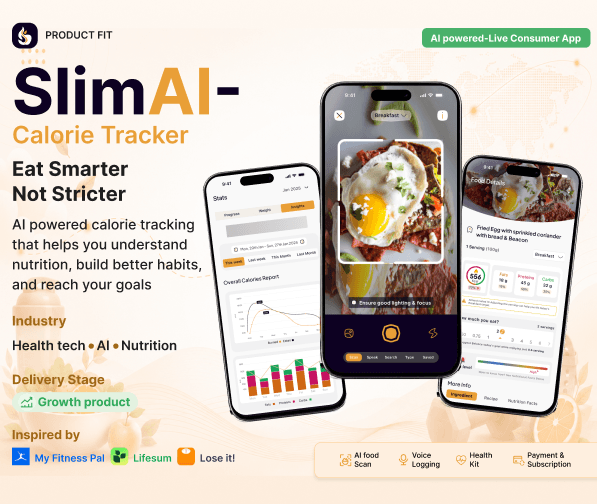
In four steps: define the one task the AI must do well, build an evaluation set from real examples, ship the thinnest product around the model with a fallback path, and measure quality and cost weekly after launch. Techparser also uses AI coding tools to speed up the build itself, with engineers responsible for architecture, tests and reviews. SlimAI, a Gemini-based calorie tracker live on Google Play, was built this way.
AI MVP cost is driven by data readiness, the number of integrations, whether AI is one feature or the whole product, and how much evaluation is needed before launch. Published 2025–2026 agency estimates typically place an AI MVP between $20,000 and $100,000, above a standard MVP because of the evaluation and guardrail work. Inference cost is separate and scales with usage. Techparser quotes a fixed scope after a call.
Techparser is model-agnostic and selects between OpenAI, Claude, Gemini and open models such as Llama on quality bar, latency, cost ceiling and data residency. The model sits behind an abstraction so providers can be switched without rewriting the product. Where privacy or cost requires it, we build on self-hosted open models so inference and data stay entirely on your infrastructure.
By measuring it against an evaluation set built from your real data and real questions, and reporting the score before launch. That replaces a judgement call based on a handful of demo queries with a number you can defend to investors and customers. The same set is re-run after every model or prompt change so quality cannot silently regress.
Through per-task model selection, caching of repeated requests, retrieval that limits context size, batching where it fits, and hard per-account usage limits. Cost per request is modelled during the build, so the margin at 1,000 and at 100,000 users is known before traffic arrives. A cheaper model is used wherever the evaluation set shows it meets the quality bar.
The failure behaviour is designed before launch. Depending on the use case, the system abstains and says so, escalates to a human, cites sources so the user can verify, or requires approval before any irreversible action. An AI MVP without defined failure behaviour is not production-ready, and no system reaches zero errors, so the path is planned rather than hoped for.
Proof and further reading
Products we shipped with this capability, and the guides we wrote from doing it.
Guide · MVP Development
How Much Does MVP Development Cost in 2026? A Scoping Guide
MVP development cost in 2026 explained: the 4 drivers, effort tables in weeks, scope tiers vs timeline, how AI features change the model, and answers to common questions.
Read the guideGuide · AI Development
AI MVP vs Traditional MVP: What Actually Changes in 2026
AI MVPs differ from traditional MVPs in 5 ways: evaluation sets, marginal cost, failure behaviour, vendor lock-in, and timeline. With a worked SlimAI example.
Read the guideGuide · Buyer Guides
How Much Does It Cost to Develop an App in 2026? Real Breakdown
App development cost in 2026 from the apps we shipped: build weeks by app type, native vs Flutter vs React Native, and post-launch costs including $99 store fees.
Read the guide

Discover Techparser
Hire Engineers

US Office
1111b South Governors Avenue
Dover, DE 19904, United States

Delivery Centre
Building No. 3, Block J-1, Sunflower Society
Johar Town, Lahore, Pakistan
© 2026 Techparser. All rights reserved.