Education
How No Yelling Kept a Driving-School App in Production for Five Years at 4.8 Stars
Techparser built the No Yelling driving-school app in 2020 and still maintains it: version 3.1.8 and 4.8 stars on Google Play after five-plus years live.
- Client
- No Yelling Driving School Pty Ltd (Australia)
- Industry
- Education
- Timeline
- In production since 2020; version 3.1.8 released July 2026
Results
- 5+ years
- In production since 2020
- 4.8★
- Google Play rating as of September 2026
- v3.1.8
- Current release, shipped July 2026
The problem
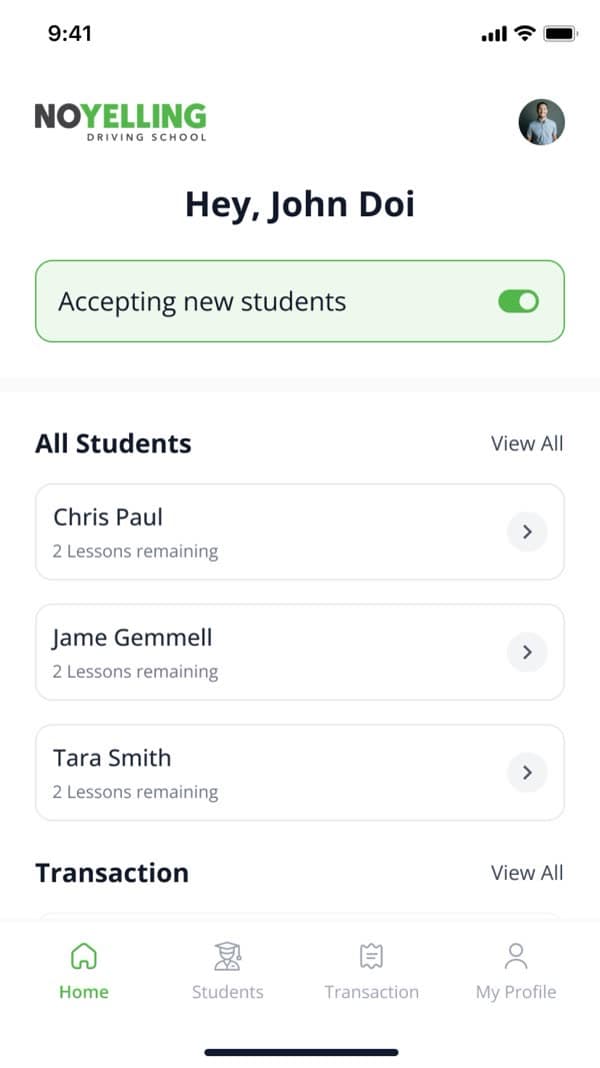
Driving instructors run their business from the car. Between lessons they need to see who is next, log what a student practised, take a payment and book the next slot, often on a phone with one hand. No Yelling Driving School, based in Australia, needed one app that let instructors manage students, lessons and payments simply, and that would keep working as the school grew and as iOS and Android changed underneath it. The instructor is often also the business owner, so the same person who teaches the lesson needs to see income, take payments and plan the week from the same screen.
A small-business app is judged over years, not at launch. The 2020 build had to survive new OS releases, new payment and address APIs, and feature requests from instructors, without a rewrite. Later, the school wanted to see problems before instructors reported them and to let users ask for help without leaving the app. That meant adding monitoring and support to an app already in daily use, and being able to push an update to every instructor when a backend change required it.
What Techparser built
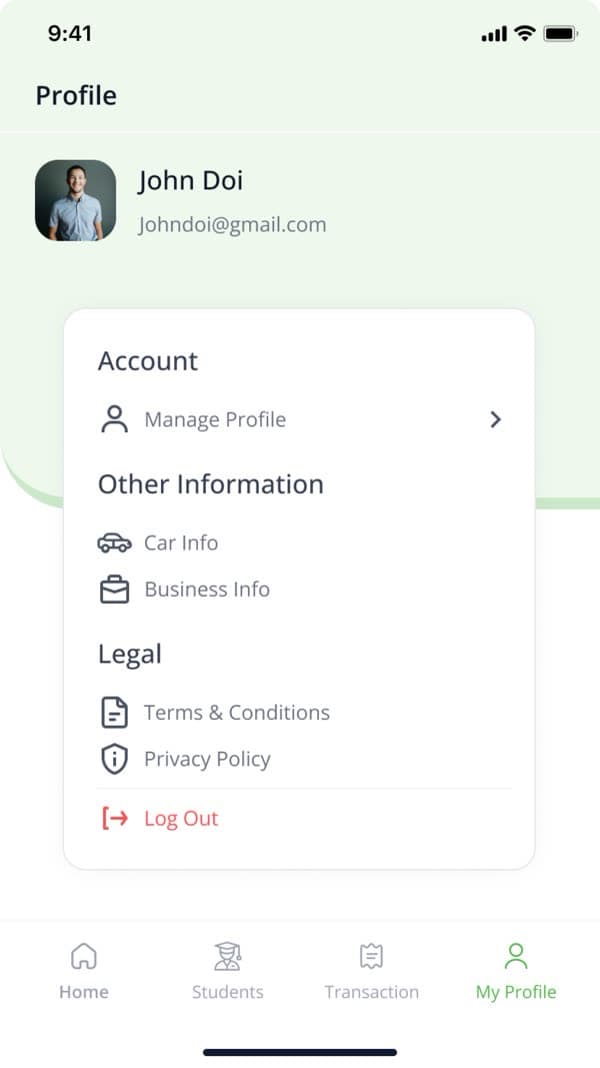
- Student management: profiles, lesson history and progress for each learner.
- Scheduling: lessons, reminders and calendar views, with address search through Google Places.
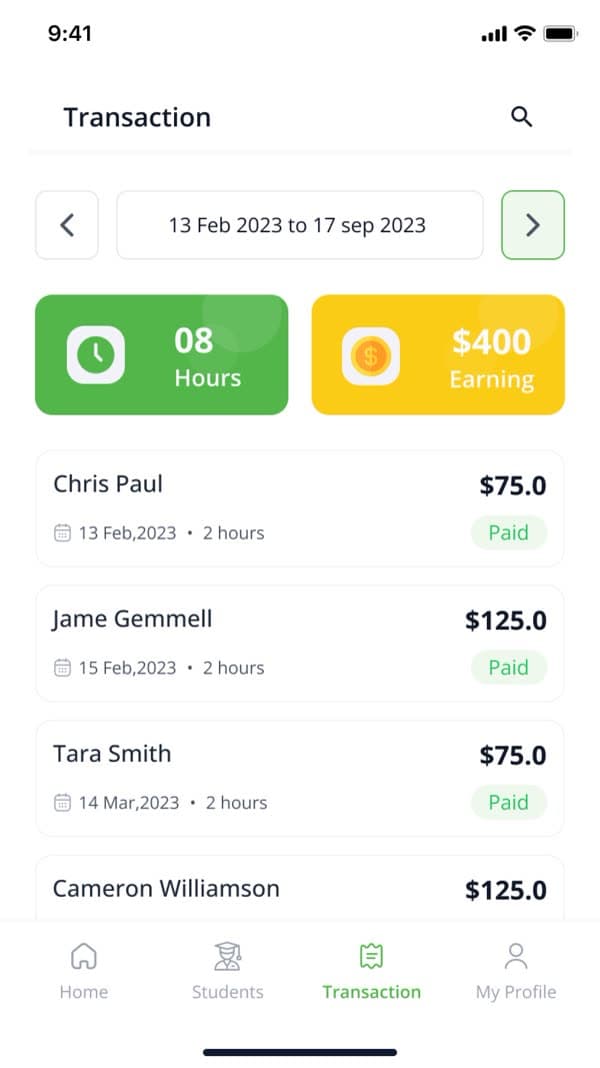
- Payments and income tracking for each instructor, with card entry validated on the device before submission.
- In-app support chat through Intercom, added in 2024, so instructors can ask for help without leaving the app.
- Performance and crash monitoring through Datadog, added in 2024, so problems show up in a dashboard before users report them.
- Biometric login, secure on-device storage of credentials, and offline access to recent data through a local SQLite store.
- A forced-update prompt for releases that every instructor must install, for example after a backend change.
Decisions that mattered
Built to be maintained
A driving-school app lives for years, so the priority in 2020 was a structure later features could build on rather than replace. The app uses Flutter with BLoC for state management, typed form models so validation rules are declared once and reused between create and edit screens, and a service layer for the API, so a new screen follows the same shape as the last. Six years on, the codebase is still the one that shipped, now on version 3.1.8, without a rewrite and without a second style of code layered on top.
Monitoring and support inside the app
In 2024 Techparser added Datadog for performance and crash monitoring and Intercom for in-app support chat. Problems now appear in a dashboard with the device and version attached, and instructors can ask a question from the screen they are stuck on. For a client without an internal engineering team, this turned support from phone calls and guesswork into a queue with evidence, and it shortened the path from a report to a fix.
Updates that reach everyone
When a release has to reach every instructor, for example after a backend change, the app checks the minimum supported version and prompts users to update before continuing. That keeps the API and the fleet of phones in step and avoids supporting old builds indefinitely, which matters for a small team maintaining one app over many years.
Work between lessons, with or without signal
Instructors open the app in car parks and country roads where coverage drops. Recent students, lessons and progress are kept in a local SQLite store so the day’s schedule is readable offline, and a connectivity check decides whether to sync or to wait rather than showing a failed request. Credentials sit in secure storage behind biometric login, so getting back into the app between lessons is a fingerprint, not a password typed one-handed.
Outcome
No Yelling has been in production since 2020. As of September 2026 the app is on version 3.1.8, released in July 2026, still shipping updates, and rated 4.8 stars on Google Play. The 2024 additions of Datadog monitoring and Intercom support chat are in the shipping build.
The maintenance work has continued through successive contracts, including an Upwork maintenance-and-improvement contract in April and May 2024, and the client left a review recommending the work without reservation. Six years after the first release, the same codebase is still the one instructors open every morning.
“Look no further. I have no been more confident in the quality of a man’s work or character. Excellent and unmatched.”
Questions about this project
- How long has Techparser maintained the No Yelling app?
- Since it was built in 2020, which is more than five years as of September 2026. The app has shipped continuously in that time and is currently on version 3.1.8, released in July 2026. Monitoring and in-app support were added in 2024 as the school’s needs changed, without a rewrite of the original codebase.
- What stack does the No Yelling app use?
- Flutter with BLoC for state management and form models for validation, a Dio-style HTTP service layer to the school’s API, SQLite for offline access to recent data, secure on-device storage for credentials, Google Places for address search, Intercom for in-app support chat and Datadog for performance and crash monitoring.
- Can Techparser take over and maintain an app another developer built?
- Yes. Long-term maintenance is a service Techparser offers on its own or after a build. The No Yelling engagement shows the shape: keep the app working through OS updates, add monitoring so problems are visible, add features when the business needs them, and manage releases on both stores. Book a call and share the current state of your app.