FROM IDEA TO LAUNCHED PRODUCT
MVP Development That Ships in Weeks, Not Quarters
Techparser builds minimum viable products for founders and product teams who need to validate an idea with real users. You get a working, production-grade first version — not a prototype you have to throw away when it works.
WHAT AN MVP SHOULD AND SHOULD NOT BE
Build the smallest thing that proves the idea works
Most failed MVPs fail for one of two reasons: too much was built before anyone used it, or so little was built that the result proved nothing. Techparser scopes the MVP around the single riskiest assumption in your business, then builds only what is needed to test it properly.
An MVP built this way lets you:
Put a working product in front of real users within weeks
Learn whether people will actually pay before scaling spend
Show investors a live product rather than a deck
Keep a codebase your next engineers can build on
HOW WE BUILD AN MVP
A structured path from first call to launched product
Most MVPs go live within 6 to 12 weeks depending on scope and integrations.




Week 1 — Scope & Riskiest Assumption
We identify the single assumption your business most depends on, cut every feature that does not test it, and agree a fixed scope, timeline, and budget before any code is written.

Weeks 2–3 — Design & Architecture
User flows, UI design, and technical architecture chosen for the next two years rather than the next two weeks. You review a clickable prototype before development starts.

Weeks 4–10 — Build & Weekly Demos
Development runs in weekly increments with a working demo every week. You see real progress in the actual product, not a status report.
Launch & Learn
We deploy to production, wire up analytics and error tracking, and hand over full ownership of the code, infrastructure, and documentation.
MVP OPTIONS COMPARED
Which MVP approach fits your stage?
Scope, timeline, and cost all follow from what you are actually trying to learn. Use this to work out which column you are in before you commit budget.
Timelines assume a single product team and no blocking third-party dependencies. Integration-heavy builds take longer.
OUR SUCCESS STORIES
Success Stories That Prove Our Expertise
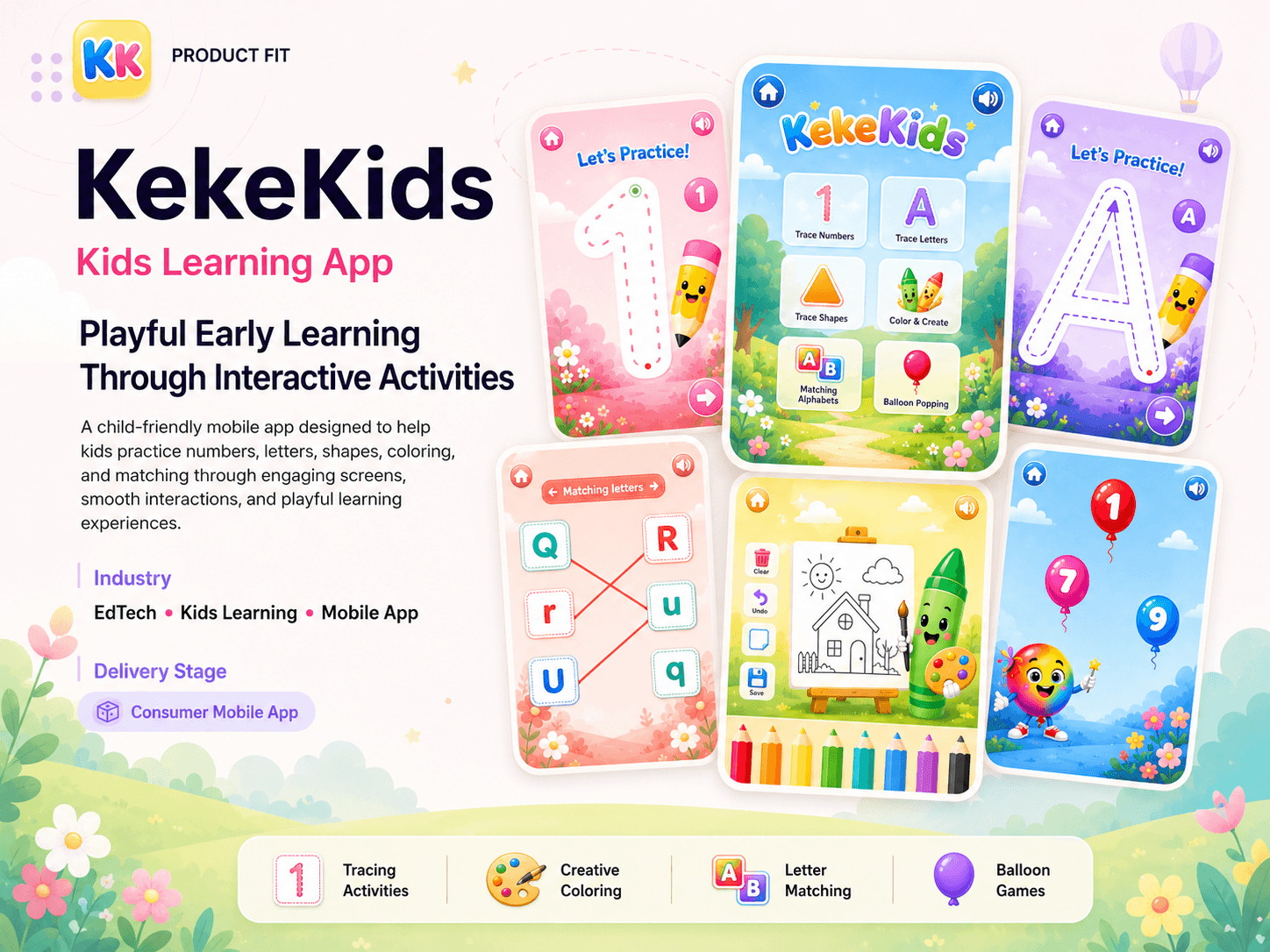
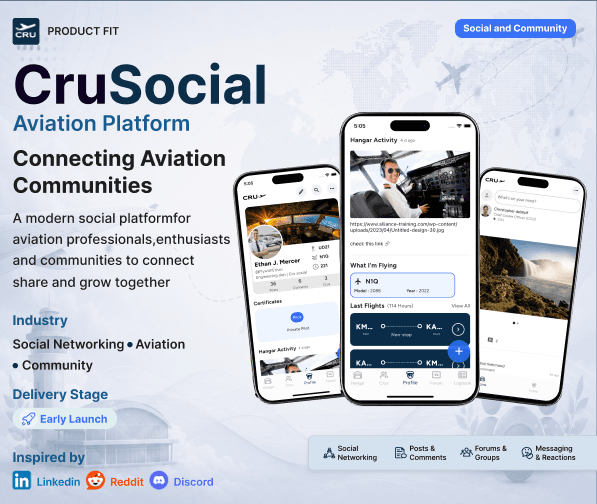
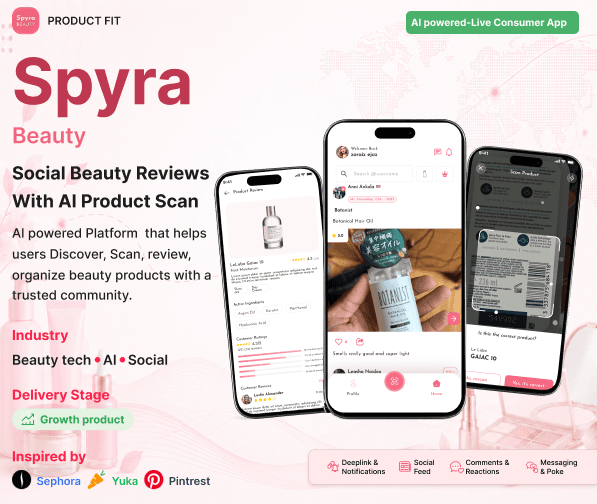
Techparser has helped build and support digital products across AI, SaaS, healthcare, mobile apps, e-commerce, beauty, wellness, real estate, automation, dashboards, and business platforms. Our work combines software engineering, product design, cloud architecture, AI integration, and growth execution to help businesses launch, modernize, and scale.
MVP Development: Insights & Answers
MVP stands for minimum viable product: the smallest version of a product that real users can use to complete a real task, released to test demand before the full build. In software development an MVP has real accounts, real data and a deployed backend, but only the core workflow. Everything that does not test the riskiest business assumption is scheduled for after launch.
MVP development cost is driven by the number of user roles, third-party integrations, whether payments are included, and how much custom UI is needed. Published 2025–2026 agency estimates typically place a startup MVP between $15,000 and $80,000, with single-workflow validation MVPs at the low end. Techparser fixes scope and budget before development starts and sends a scoped estimate within two business days of a call.
Most MVPs launch in 6 to 12 weeks. An idea validation MVP covering one core workflow typically takes 6 to 8 weeks. An investor-ready or revenue-ready MVP with payments, onboarding and admin tooling typically takes 8 to 14 weeks depending on integrations. Techparser delivered the Pop-out MVP ahead of its agreed schedule using this phased approach.
A prototype demonstrates an idea and cannot be used; an MVP is a deployed product that customers can use for a real task. A prototype tests whether people understand the concept and usually takes days to make. An MVP tests whether people will use and pay for the product, so it needs real accounts, real data and a working backend.
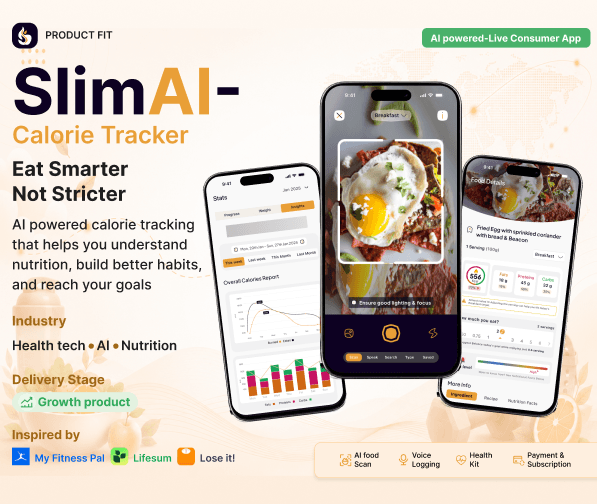
An AI MVP is the smallest deployed version of an AI-powered product that real users can use on real data. Beyond a normal MVP it needs an evaluation set that proves output quality before launch, defined fallback behaviour when the model is wrong, and cost controls at expected volume. Techparser covers these under AI MVP development and built SlimAI, an AI calorie tracker, this way.
No, not if it is built on production-grade architecture. Techparser builds MVPs with tests, CI/CD and documentation so the same codebase carries into the scaled product. What gets cut for an MVP is scope, not engineering quality. Rebuilds happen when an MVP is built as a throwaway demo, which is a decision made at the start rather than a rule of MVPs.
You do. All source code, infrastructure configuration, designs and documentation transfer to you, including repository and cloud account ownership. Techparser signs an NDA on request before scoping, and the engagement agreement assigns all intellectual property to your company. You can take the codebase in-house or to another team at any time without licence fees.
Yes. Techparser audits the existing codebase, infrastructure and outstanding scope, then reports honestly whether continuing or rebuilding is cheaper. The audit is a fixed standalone engagement, so you are not committed to the build to get the answer. Project takeover is one of four engagement models alongside fixed scope, dedicated team and staff augmentation.
Proof and further reading
Products we shipped with this capability, and the guides we wrote from doing it.

Guide · MVP Development
How Much Does MVP Development Cost in 2026? A Scoping Guide
MVP development cost in 2026 explained: the 4 drivers, effort tables in weeks, scope tiers vs timeline, how AI features change the model, and answers to common questions.
Read the guideGuide · AI Development
AI MVP vs Traditional MVP: What Actually Changes in 2026
AI MVPs differ from traditional MVPs in 5 ways: evaluation sets, marginal cost, failure behaviour, vendor lock-in, and timeline. With a worked SlimAI example.
Read the guideGuide · Buyer Guides
How Much Does It Cost to Develop an App in 2026? Real Breakdown
App development cost in 2026 from the apps we shipped: build weeks by app type, native vs Flutter vs React Native, and post-launch costs including $99 store fees.
Read the guide

Discover Techparser
Hire Engineers

US Office
1111b South Governors Avenue
Dover, DE 19904, United States

Delivery Centre
Building No. 3, Block J-1, Sunflower Society
Johar Town, Lahore, Pakistan
© 2026 Techparser. All rights reserved.